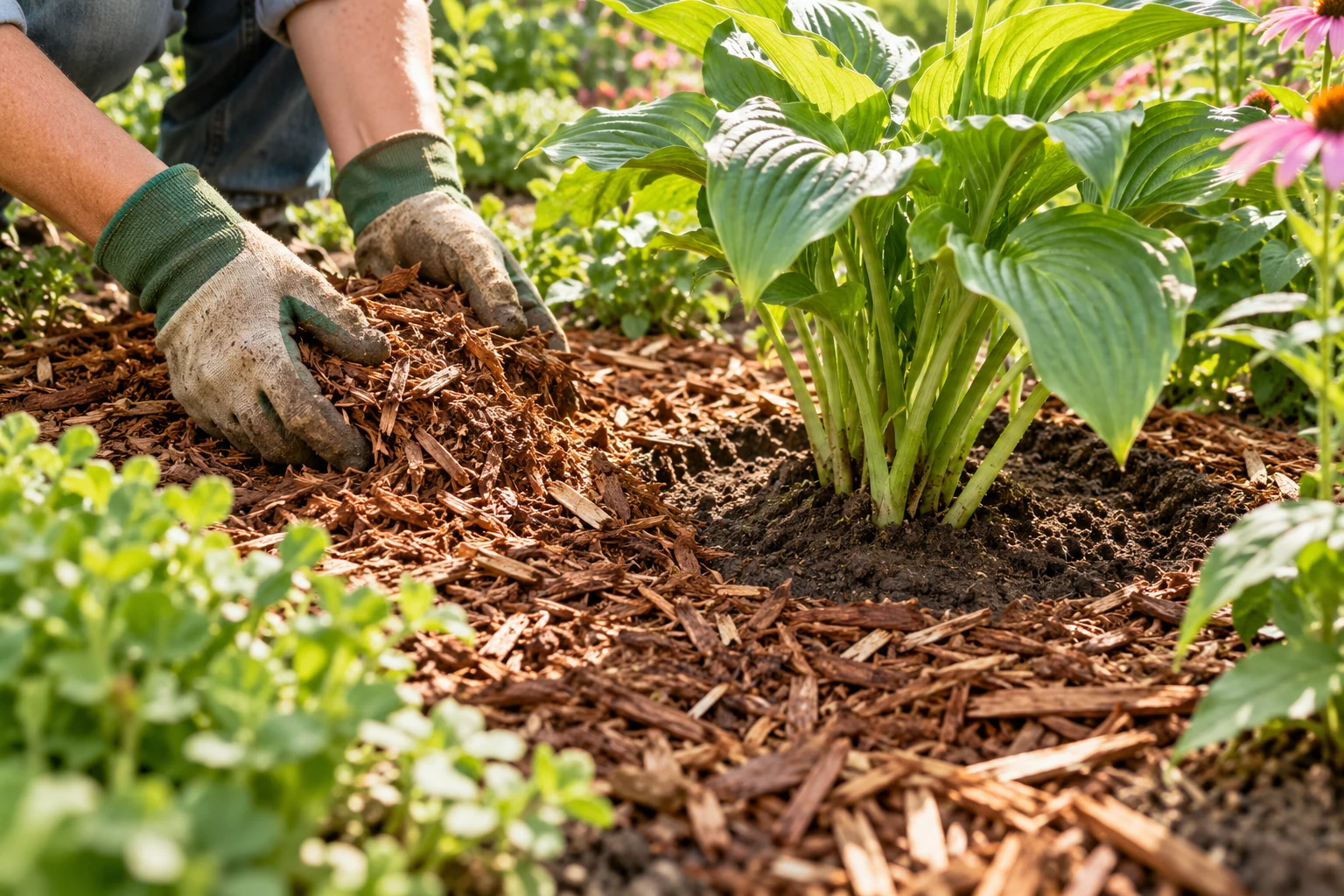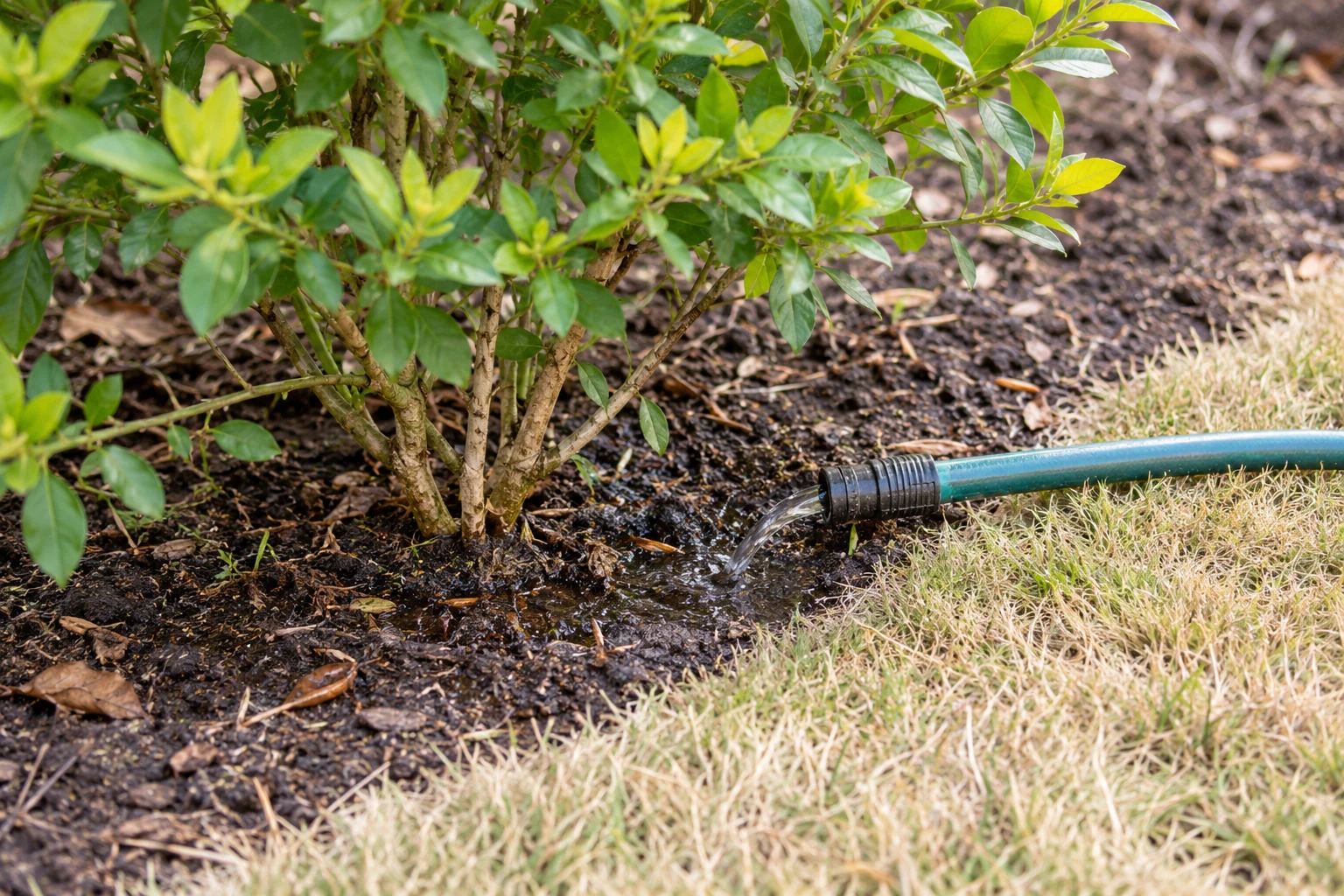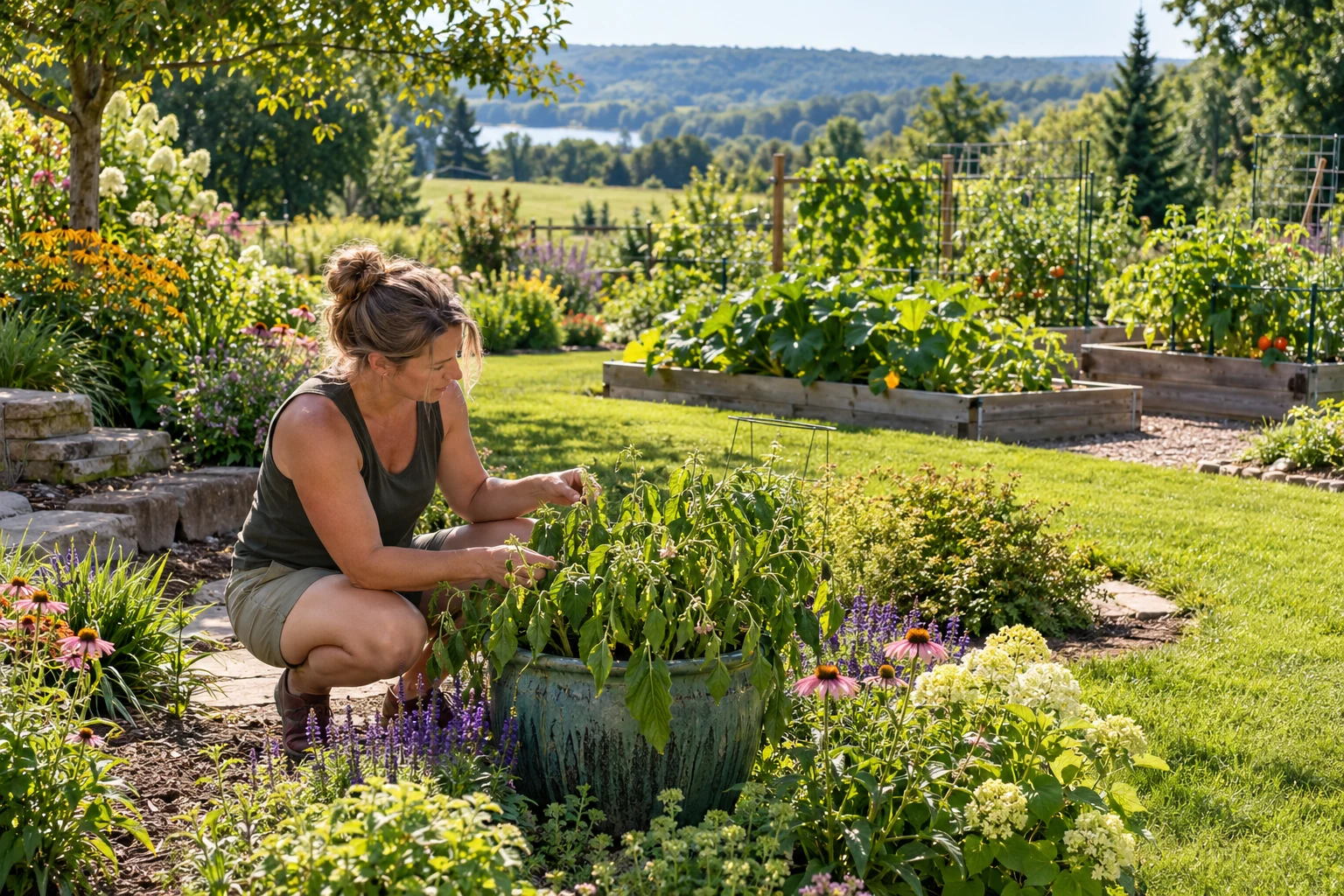
Sustained temperatures above 90°F and prolonged shortages of precipitation can stress Wisconsin gardens and reduce plant growth. This guide covers preparation, care during hot and dry weather, and recovery afterward. Understanding those stages helps gardeners decide where to focus their attention as conditions change. Heat and drought can compound one another. As soil dries, roots have less water available; summer warmth also increases water loss from soil while growing plants need water. The combination can bring on problems quickly. ## Prepare before the soil dries out Think of preparation as a series of choices about plants, soil, and routine care. Choose a mix of plants suited to heat and limited moisture, and consider deeper-rooted options where appropriate. Some vegetable cultivars tolerate heat better than others. For lawns, fine fescues or tall fescue offer alternatives to perennial ryegrass and Kentucky bluegrass; sedges are another option when considering a move away from turf. Give those planting choices a supportive foundation. Apply mulch to conserve soil moisture, build organic matter over time to improve water storage, and maintain plant health before difficult weather arrives. These practices address different parts of the same need: helping plants enter a dry spell with access to moisture and without existing stress. Set lawn mowing height during normal seasonal care. The source recommends 3.5–4 inches to encourage deeper rooting. Once drought is underway, avoid mowing when possible; if mowing is necessary, retain the height already used that season rather than raising it during the drought. ## Water where it matters Morning watering reduces evaporation losses. Apply water slowly and deeply at the plant’s base so it can soak into the soil instead of running off. Drip irrigation and soaker hoses are useful options. Avoid overwatering, which can damage roots. Recent transplants, containers, and drought-sensitive plants need close observation. Water dry soil or wilting plants even outside the preferred morning window. Containers can dry quickly enough to need watering more than once daily. Sandy soil generally dries faster than clay soil. Shade cloth or an old bedsheet can shelter sensitive plants. Use those watering principles as a practical checking routine. Begin with vulnerable plants: examine containers, recent transplants, and plants known to struggle with drought. Then consider the soil beneath them. A sandy bed and a clay bed may dry at different rates, so a single watering routine may not suit both. When water is needed, direct it toward the soil around the plant’s base and apply it slowly enough to absorb. Keep the goal clear: water reaching the roots, with less lost to runoff or evaporation. Morning is the preferred opportunity, but a struggling plant should not wait simply because that opportunity has passed. Include pest observation in the same round of garden checks. Warm, dry conditions can favor problems such as spider mites. Watering and scouting belong together here: one supports stressed plants, while the other helps you notice additional trouble. ## Pause jobs that add stress A heat wave changes the garden’s immediate priorities. Put fertilizing, transplanting, and propagation on hold. Avoid chemical applications during extreme heat or drought, and always follow product labels. These conditions also call for restraint with pruning, including removing tomato suckers. Distinguish necessary branch removal from routine shaping. Broken, dead, or diseased branches are exceptions to the advice to avoid pruning. For herbaceous plants recovering after severe wilting, leave scorched or dead leaf tissue in place rather than treating cleanup as the first task. Deadheading flowers is acceptable. Focus first on watering and watching the plant’s response. ## Support recovery through a prolonged dry spell Severely wilted herbaceous plants may develop curled, browned, or scorched leaves. Water slowly and deeply when these symptoms appear. Plants that revive need continued watering support; those that fail to respond are likely dead. Dormant turf facing more than six weeks of drought needs water to protect its crowns. Approximately ¼ inch weekly generally hydrates crowns without restoring green growth. Trees and shrubs also need supplemental water during extreme drought or prolonged extreme heat. Their stress symptoms may persist or appear in later years, making continued monitoring important. Treat recovery as continued care rather than a single watering event. For herbaceous plants, watch whether slow, deep watering produces a response, then keep supporting those that recover. For dormant turf, distinguish maintaining living crowns from trying to make the lawn green again. Keep woody plants on the care list after the immediate hot spell ends. Continue appropriate watering through fall and monitor their condition in subsequent years. If a tree or shrub keeps declining, consult a certified arborist about its viability. This longer view matters because drought damage in woody plants may outlast the weather that caused it.